Blue Screen Snipers: When Every IRC Kid Became a Digital Assassin With a Single TCP Packet
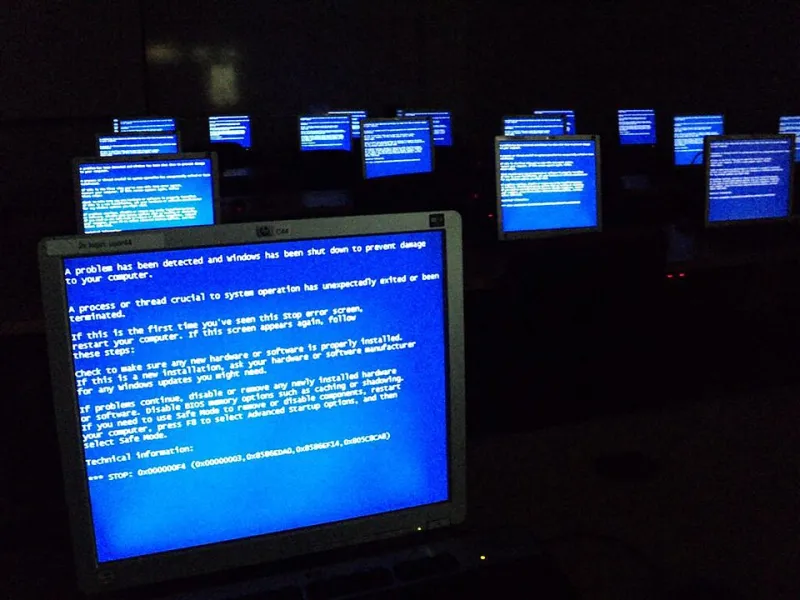
Picture this: It's 1997, and you're finally winning that heated argument about whether Quake or Unreal Tournament has better graphics when suddenly your Windows 95 machine freezes, displays a cheerful blue screen of death, and reboots itself. Your opponent in #gamers just "nuked" you with a single malformed TCP packet, and Microsoft's flagship operating system collapsed like a house of cards in a hurricane.
Welcome to the WinNuke era, when every IRC channel became a digital Wild West and every script kiddie with a stolen copy of NetBus could play god with your desktop.
The Vulnerability That Broke the Internet
WinNuke wasn't just a bug — it was a design flaw so fundamental that it made Microsoft's entire networking stack look like it was written by drunk interns during a coffee shortage. The vulnerability lived in Windows' implementation of the TCP/IP stack, specifically in how it handled out-of-band (OOB) data sent to port 139.
"It was beautiful in its simplicity," recalls Kevin, a former IRC regular who spent his teenage years terrorizing dial-up users across EFNet. "You'd send a single TCP packet with the urgent flag set to port 139, and boom — instant blue screen. It was like having a digital sniper rifle that could headshot any Windows machine on the planet."
The technical details were elegantly catastrophic. Windows 95 and NT would receive the malformed packet, attempt to process the urgent data, and immediately crash when the networking subsystem encountered an unexpected condition. No authentication required, no complex exploit chain needed — just raw TCP and the kind of programming oversight that makes security researchers wake up in cold sweats.
Script Kiddie Arms Race
Within weeks of the vulnerability's discovery, IRC channels across the internet became digital battlefields. Nuker tools proliferated faster than bootleg Photoshop CDs at a computer show. Programs like "WinNuke95," "Smurf," and "Teardrop" turned every Windows user into a potential victim and every teenager with a TCP/IP connection into a potential terrorist.
"It was like the nuclear proliferation crisis, except instead of uranium enrichment, you just needed to download a 50KB executable from some FTP site in Eastern Europe," explains Lisa, who documented the early days of the nuker wars for her computer science thesis. "Suddenly every 13-year-old in America had the power to crash government workstations, corporate servers, and their little brother's computer from across the internet."
The tools evolved rapidly. Early nukers required target IP addresses and manual execution. Within months, automated scanners could identify vulnerable Windows machines across entire IP ranges. Advanced versions included features like "nuke lists" for mass attacks, proxy support for anonymity, and even GUI interfaces that made digital warfare as easy as playing Minesweeper.
IRC Channel Warfare
IRC became the primary battlefield for WinNuke chaos. Channel operators wielded nuking scripts like digital scepters, instantly removing troublemakers with a quick IP lookup and a malformed packet. Regular users lived in constant fear of saying the wrong thing to someone with root access and a bad attitude.
"Channel wars were insane," remembers Mike, a former #warez regular who survived multiple nuking campaigns. "You'd have rival groups trying to take over channels by systematically nuking anyone who opposed them. It was like gang warfare, except instead of drive-by shootings, you had drive-by blue screens."
The social dynamics were fascinating and terrifying. Users would mask their real IP addresses using proxies, IRC bouncers, and shell accounts on university systems. The ability to nuke became a form of digital currency — protection rackets emerged where powerful users would offer "nuke immunity" in exchange for warez uploads or channel loyalty.
"I knew kids who would spend hours researching their enemies' IP addresses, waiting for the perfect moment to strike," recalls Sarah, who moderated several music-focused IRC channels during the height of the nuking wars. "You'd be in the middle of a normal conversation about the new Nine Inch Nails album, and suddenly half the channel would disappear because someone got trigger-happy with WinNuke."
 Photo: Nine Inch Nails, via static.spin.com
Microsoft's Frantic Fire Brigade
Microsoft's response to WinNuke was a masterclass in corporate panic management. The company had shipped tens of millions of copies of Windows 95 with a vulnerability that could be exploited by literally anyone with an internet connection and five minutes of free time.
"They were absolutely terrified," explains a former Microsoft security engineer who requested anonymity. "This wasn't some theoretical attack that required physical access or social engineering. Any script kiddie could crash any Windows machine on the planet with a single command. It was like we'd accidentally given every teenager in America a nuclear weapon."
The emergency patch process revealed just how unprepared Microsoft was for internet-scale security threats. The company's patch distribution infrastructure, designed for corporate IT departments and floppy disk updates, couldn't handle the sudden demand from millions of panicked home users.
"We had to completely redesign our patch delivery system overnight," the former engineer continues. "The original plan was to mail out floppy disks to registered users. When we realized that would take six months and cost millions of dollars, someone suggested this crazy idea called 'downloading patches from the internet.'"
The Cultural Impact
WinNuke didn't just crash computers — it fundamentally changed how people thought about internet security and digital vulnerability. Before 1997, most home users viewed their computers as isolated islands that occasionally connected to bulletin board systems or early ISPs. WinNuke demonstrated that every internet connection was a potential attack vector.
"It was the first time regular people realized that being online meant being vulnerable," argues Dr. Jennifer Hayes, who studies the social impact of early internet security threats. "WinNuke turned abstract concepts like 'network security' and 'remote attacks' into immediate, personal experiences. Your computer could literally be destroyed by a stranger you'd never meet, using tools you'd never heard of."
The vulnerability also accelerated the development of personal firewall software and network security awareness. Companies like Zone Labs and Symantec built entire product lines around protecting home users from nuking attacks. The concept of "script kiddies" entered mainstream vocabulary, usually accompanied by parental panic about their children's online activities.
Legacy of Digital Destruction
WinNuke was eventually patched, but its cultural impact lasted far beyond the technical fix. It established precedents for how security vulnerabilities would be weaponized, distributed, and ultimately commercialized in the decades that followed.
"WinNuke was the beta test for every remote exploit that came after," argues Marcus Thompson, a security researcher who tracked the evolution of network attacks throughout the late 1990s. "It proved that you could distribute attack tools to masses of non-technical users and create chaos on a scale that nobody had imagined."
The vulnerability also highlighted the fundamental tension between connectivity and security that continues to define internet culture today. Every new feature, every network protocol, every attempt to make computers more accessible creates new opportunities for abuse by people with bad intentions and good internet connections.
Today, WinNuke seems almost quaint compared to modern cyber threats. But for anyone who lived through the era of dial-up connections and IRC channel wars, it remains a powerful reminder of when the internet was small enough that a single teenager with a nuking script could terrorize thousands of users across multiple continents.
"We were all digital pioneers back then," reflects Kevin, the former IRC terrorist who now works in cybersecurity. "We just didn't realize we were pioneering new forms of chaos along with everything else. WinNuke taught us that on the internet, everyone is both predator and prey — sometimes within the same IRC session."
The blue screens have faded, the nuking tools have been consigned to computer history museums, and Microsoft's networking stack has been rebuilt from the ground up. But the lesson of WinNuke endures: in cyberspace, vulnerability is just one malformed packet away, and the power to destroy is often just a download link and a moment of digital rage.