
The Great Land Grab of '96
Long before Jeff Bezos started renting compute by the millisecond, the early web was carved up like the Oklahoma Land Rush—except instead of covered wagons, teenagers armed with pirated copies of FrontPage were racing to claim their piece of digital territory. The prize? A whopping 2MB of server space and a URL that looked like it was assembled by a drunk typist.
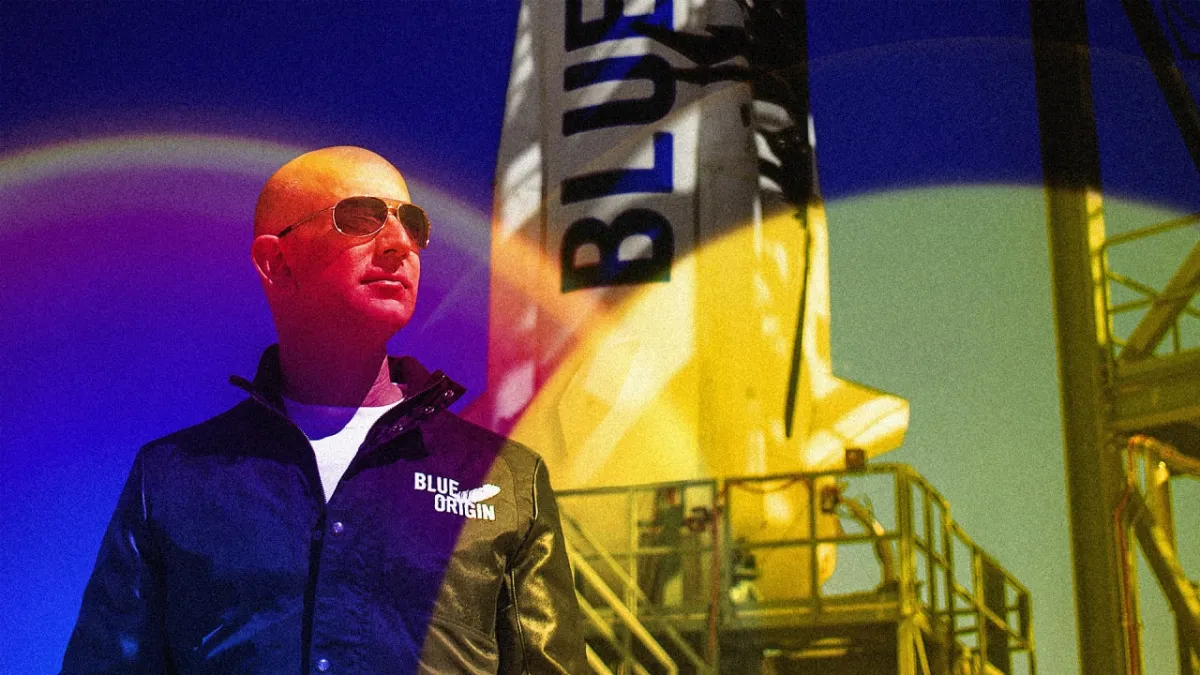 Photo: Jeff Bezos, via images.fastcompany.net
Geocities was the Manhattan of free hosting—prestigious, overcrowded, and full of people who thought they were more important than they actually were. AngelFire was the sketchy side of town where anything went, as long as you could tolerate banner ads that looked like they were designed by a committee of colorblind marketing executives. And somewhere in between were dozens of forgotten platforms that briefly ruled their own little corners of cyberspace before vanishing into the 404 void.
The Hierarchy of Digital Slumlords
Not all free hosts were created equal. There was a definite pecking order, and every webmaster worth their salt knew exactly where they stood in the digital caste system.
Geocities sat at the top, the Park Avenue of free hosting. Getting a spot in the right "neighborhood" was like winning the lottery. /Hollywood for entertainment sites, /SiliconValley for tech projects, /Area51 for the conspiracy theorists and UFO enthusiasts. The themed directories weren't just organization—they were social stratification.
Tripod occupied the respectable middle class. Better uptime than most, reasonable banner ad placement, and a URL structure that didn't make your site look like it was hosted on a compromised Russian server. Tripod was where you graduated to when you outgrew Geocities but couldn't afford actual paid hosting.
AngelFire was the digital equivalent of a trailer park. Anything went, enforcement was minimal, and if you could stomach the popup ads that multiplied like digital rabbits, you could host pretty much anything short of actual nuclear launch codes. This made it the preferred platform for warez sites, underground music archives, and teenagers who'd been banned from everywhere else.
The Underground Railroad of Banned Content
The real action happened in the shadows, where webmasters played an endless game of cat and mouse with Terms of Service violations. Got your Geocities account nuked for hosting ROM files? No problem—Xoom was just a domain registration away. Tripod shut down your MP3 archive? FortuneCity was running a special on accounts with relaxed content policies.
This nomadic existence created a generation of digital gypsies who could pack up an entire website and migrate to a new host faster than you could say "copyright infringement." They developed sophisticated backup strategies, mirror sites, and redirect chains that would make modern CDN architects weep with admiration.
The smart operators maintained accounts across multiple platforms simultaneously. When one got nuked, they'd simply update their IRC channel topic with the new URL and continue business as usual. It was distributed hosting before anyone called it that, driven not by engineering brilliance but by pure survival instinct.
The Banner Ad Apocalypse
Every free host had its own special brand of advertising hell. Geocities forced you to display a floating toolbar that followed users around like a persistent digital mosquito. AngelFire preferred popup windows that spawned with the enthusiasm of digital rabbits in heat. Tripod went with the more subtle approach of banner ads that somehow managed to be both boring and offensive simultaneously.
The worst offenders were the smaller hosts that tried to compete by offering "premium" features in exchange for even more invasive advertising. Some platforms would inject JavaScript into your pages without warning, turning innocent personal websites into malware distribution points. Others would replace your carefully crafted HTML with auto-generated garbage designed to maximize ad impressions.
Webmasters developed increasingly sophisticated techniques to subvert these systems. Hidden frames, JavaScript redirects, and CSS tricks that would make the ads technically present but practically invisible. It was an arms race between teenage hackers and corporate advertising algorithms, and somehow the teenagers were winning.
The Great Yahoo Genocide
The end came not with a bang but with a corporate press release. In 2009, Yahoo announced that Geocities would be shutting down, taking with it millions of websites that had collectively documented a decade of internet culture. The reaction was swift and predictable: mass panic, frantic archiving efforts, and the sudden realization that an entire digital civilization was about to disappear overnight.
The Internet Archive launched emergency preservation efforts, but the scale was impossible. Millions of pages, images, and files vanished forever, taking with them irreplaceable documentation of early web culture. Personal homepages, fan sites, underground archives, and digital art projects—all reduced to broken links and 404 errors.
What made it worse was how sudden it felt. These platforms had seemed permanent, or at least permanent enough. The idea that a corporate decision could erase years of work and creativity was alien to users who'd grown up thinking the internet was forever.
The Archaeological Aftermath
Today, finding remnants of the free hosting era is like digital archaeology. The Wayback Machine preserves fragments, but they're ghostly echoes of what once was—images missing, links broken, the interactive elements that made these sites special reduced to static HTML.
Occasionally, someone discovers a forgotten mirror or a backup that survived the great purge. These findings are treated with the reverence usually reserved for Dead Sea Scrolls, offering glimpses into a time when the web was weird, personal, and completely unmonetized.
The legacy lives on in unexpected places. Many of today's tech leaders cut their teeth on these platforms, learning HTML and CSS through trial and error, developing an intuitive understanding of web technologies that no bootcamp could provide. The skills learned while trying to make a website work despite invasive banner ads and arbitrary file size limits proved surprisingly transferable to the modern era of resource constraints and performance optimization.
The Paradise We Lost
Looking back, the free hosting era represents something we've lost in the modern web. It was democratized, chaotic, and completely unpredictable. Anyone with a computer and a phone line could carve out their own corner of cyberspace and fill it with whatever weird, wonderful, or completely pointless content their imagination could produce.
The barriers to entry were practically nonexistent, but the technical challenges were real. You had to actually understand how websites worked, not just how to configure a WordPress theme. The result was a web that felt more handmade, more personal, and infinitely more surprising than anything we see today.
In the end, the free hosting wars weren't just about server space and bandwidth—they were about digital freedom, creative expression, and the radical idea that everyone deserved a voice on the internet, even if that voice was accompanied by blinking banner ads and MIDI background music.