The Accidental Historians
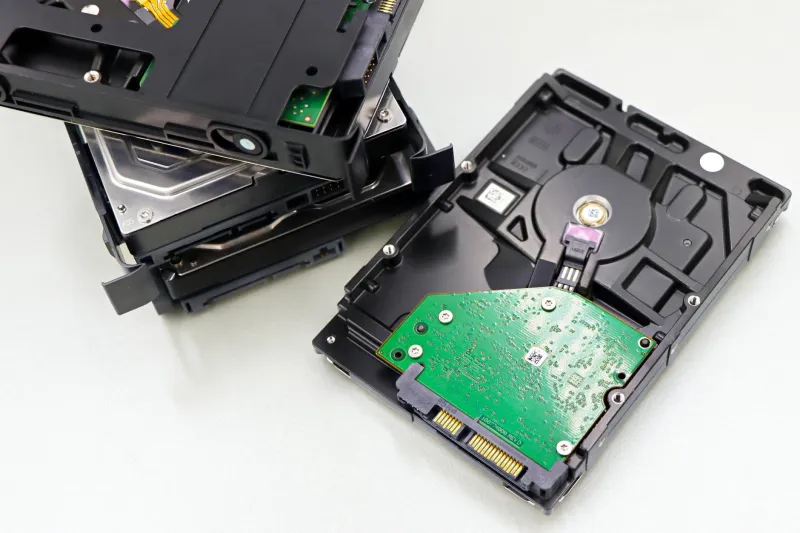
Somewhere in a storage unit in Akron, Ohio, there's a Dell Dimension 4100 with a 20GB hard drive that contains more authentic teenage discourse from 2001 than the Library of Congress. The owner doesn't know this, because like most of his generation, he never bothered to check what mIRC was actually saving every time someone typed "lol" in #counterstrike.
 Photo: Akron, Ohio, via c8.alamy.com
This machine, along with thousands like it scattered across America's suburbs, represents the greatest archival disaster of the digital age. Not because important data was intentionally destroyed, but because an entire generation accidentally created the most comprehensive record of adolescent life in human history—then promptly forgot it existed.
While historians struggle to piece together how ordinary people lived in previous centuries, we managed to document every inside joke, relationship drama, and late-night gaming session of the early internet era. The problem? We stored it all in .txt files on computers we eventually threw away.
The Logging Revolution Nobody Noticed
IRC clients started logging conversations by default sometime in the mid-90s, and most users never bothered to turn it off. Why would they? Hard drive space was cheap, and who cared about saving chat logs? It's not like anyone would ever want to read through thousands of lines of "anyone want to scrim?" and "brb getting pizza."
But those seemingly meaningless conversations were actually treasure troves of cultural data. Language evolution in real-time. The birth of internet slang. Detailed documentation of gaming culture, music scenes, and teenage social hierarchies. Anthropologists would kill for this kind of primary source material from any other era.
The sheer volume was staggering. A busy channel could generate thousands of lines per day. Multiply that by dozens of channels, hundreds of networks, and millions of users, and you're looking at a dataset that dwarfs most corporate archives. All of it sitting quietly in /logs folders that nobody ever opened.
The Format Wars That Doomed Everything
Every IRC client had its own logging format, and none of them were standardized. mIRC saved plain text files with timestamps. HydraIRC used a different timestamp format. X-Chat on Linux had its own conventions. BitchX logs looked completely different from ircII logs.
This wasn't just an inconvenience—it was a preservation nightmare. There was no universal tool for reading old logs, no standard way to search across different formats, and definitely no thought given to long-term archival. Each client was an island of incompatible data, making it nearly impossible to aggregate or analyze the information even when people bothered to save it.
The worst part was the encoding chaos. Early logs were often saved in whatever character encoding the client felt like using, leading to a mess of corrupted Unicode, mangled special characters, and text that became unreadable the moment you tried to open it with a different program.
The Hard Drive Purge of 2005
The great extinction event wasn't a single catastrophe—it was a gradual massacre that played out over several years as the dial-up generation upgraded to broadband and bought new computers. The ritual was always the same: copy over the important stuff (music, photos, maybe some documents), then format the old drive or toss the entire machine.
IRC logs weren't considered "important stuff." They were digital clutter, taking up valuable space that could be used for downloaded movies or pirated software. The idea that these conversations might have historical value was laughable. Who would ever want to read through old chat logs?
The timing was particularly brutal. Most of these logs were created between 1995 and 2005, right before social media platforms started keeping permanent records of everything. It was the last generation to document their lives extensively without thinking about preservation, and the first to have the technical means to do it comprehensively.
The Survivors Speak
Finding someone who actually kept their IRC logs is like discovering a living mammoth. But they exist, and their stories are fascinating. These accidental archivists fall into a few categories: the obsessive completists who backed up everything, the nostalgic packrats who couldn't bear to delete anything, and the lucky few whose old computers simply never died.
One such survivor, a former #quake regular who goes by the handle "fragmaster," discovered 127MB of logs from 1999-2003 while cleaning out his parents' basement. "I opened one randomly and found a two-hour argument about whether the rocket launcher was overpowered in Quake 3," he told me. "But buried in there was also this incredibly detailed discussion about 9/11 as it was happening. We were just kids trying to process this massive historical event in real-time."
Another archivist, who maintained logs from multiple warez channels, found evidence of software distribution networks that moved faster and more efficiently than anything the legitimate tech industry had built. "These kids were running global supply chains out of their bedrooms," she explained. "The logs show coordination across time zones, quality control processes, and customer service that would make Amazon jealous."
The Archaeology of Digital Conversations
The few preserved logs that surface occasionally provide fascinating glimpses into a lost world. The language is immediately recognizable but distinctly different from modern internet discourse. Conversations had natural rhythms, interrupted by connection drops and rejoins. Inside jokes developed over months and persisted for years. The social dynamics were complex and nuanced in ways that 280-character tweets could never capture.
More importantly, these logs capture the moment when internet culture was crystallizing. You can trace the evolution of gaming terminology, watch slang spread from channel to channel, and observe how online communities developed their own customs and hierarchies. It's digital anthropology in its purest form.
The technical discussions are equally valuable. Kids were solving networking problems, sharing programming knowledge, and collaborating on projects with a sophistication that belied their age. The logs document an entire generation learning computer science through trial and error, guided by peers who were often equally clueless but willing to experiment.
What We Lost When We Lost the Logs
The destruction of IRC's conversational archive represents more than just nostalgic loss—it's a genuine historical catastrophe. Future historians trying to understand how internet culture developed will have massive gaps in the record, precisely during the period when online communities were taking their modern form.
We lost documentation of how gaming culture evolved, how music sharing networks operated, how teenage social dynamics adapted to digital spaces, and how technical knowledge spread through informal mentorship. We lost the raw material for understanding one of the most significant cultural shifts in human history.
Perhaps most tragically, we lost the voices of ordinary users. The IRC logs weren't created by famous personalities or influential figures—they were the conversations of regular people living through the internet revolution. Their perspectives, struggles, and discoveries are irreplaceable primary sources that we'll never recover.
The Lesson We Refuse to Learn
The IRC logging disaster should have taught us about the importance of digital preservation, but instead we've doubled down on ephemeral communication. Snapchat messages disappear by design. Discord conversations vanish into the scroll-back void. Even platforms that do save data often make it inaccessible to users or researchers.
We're repeating the same mistake on a larger scale, creating vast amounts of cultural data while building systems designed to forget. The difference is that now we know better—we're choosing to let history disappear.
The teenagers who lost their IRC logs didn't know they were destroying historical documents. Today's users are making the same choice with full awareness of what they're giving up. In fifty years, researchers will face the same problem historians face today: trying to understand a pivotal moment in human communication through fragments and echoes, because the people who lived through it decided their conversations weren't worth saving.
The hard drives are still out there, sitting in closets and storage units, slowly degrading. Every year, more of them die, taking their irreplaceable cargo with them. The window for recovery is closing, and soon the great IRC archive will be nothing but digital archaeology—tantalizing glimpses of a lost civilization that documented everything and saved nothing.