Ethernet Cables and Existential Crisis: How 200-Person LAN Parties Accidentally Built the Backbone of Amazon Web Services
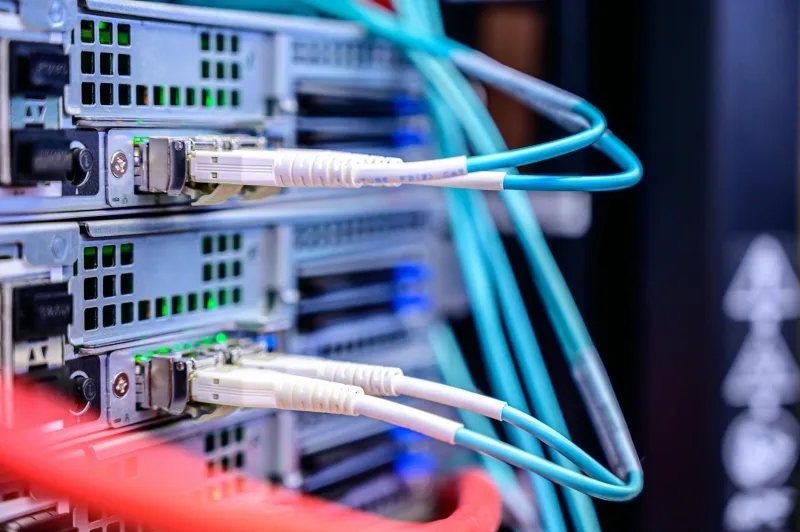
The Church Basement That Changed Everything
Picture this: It's 2:47 AM on a Saturday in 1999. You're in the basement of St. Matthew's Lutheran Church in suburban Minneapolis, surrounded by 200 CRT monitors glowing like digital campfires. The air smells like Mountain Dew, pizza grease, and the distinctive ozone scent of overheating network equipment. And somewhere in this maze of folding tables and ethernet cables, Kevin — seventeen years old, three Red Bulls deep, and running on pure teenage determination — is trying to figure out why half the network just died during the final round of the Unreal Tournament bracket.
This was the golden age of LAN parties, when getting 200 gamers connected to the same network required the kind of logistical planning that would make NATO jealous. What nobody realized at the time was that Kevin and thousands of kids like him were accidentally inventing the fundamental principles that would later become cloud computing, microservices architecture, and enterprise network management.
When DHCP Was a Four-Letter Word
The modern internet runs on elegant abstractions — you click a button, spin up a server, and magically everything just works. But in 1999, getting 200 Windows 98 machines to see each other on the same network was like performing surgery with a chainsaw while riding a unicycle.
DHCP? More like "DHCP, Please God, Why Won't You Work." Every LAN party had that one kid who thought he understood networking because he'd read a Cisco manual, and inevitably he'd try to set up automatic IP assignment for the entire event. Three hours later, half the computers had conflicting addresses, the other half couldn't see the game servers, and someone was crying in the corner because their Counter-Strike clan match was supposed to start an hour ago.
The solution was always the same: static IP assignments, written on index cards, distributed like holy relics. "You're 192.168.1.47. Write it down. Don't lose it. If you change it, I will personally unplug your computer and throw it in the parking lot."
The Folding Table Datacenter
Walmart folding tables became the server racks of the LAN party era. These flimsy plastic-and-metal contraptions, designed to hold casseroles at church potlucks, somehow became the foundation for networks that would make enterprise IT departments weep with envy.
Every table had its purpose: the corner table was always for the main game server (usually running on someone's dad's Pentium II that definitely wasn't supposed to leave the house). The table by the wall held the stack of 24-port hubs, daisy-chained together in configurations that violated every networking best practice ever written. And the table nobody wanted to sit at? That's where they put the WINS server, because someone had to resolve NetBIOS names, and it might as well be the kid who showed up late.
These improvised datacenters taught an entire generation about redundancy, load balancing, and network segmentation — not through textbooks, but through the harsh reality of trying to keep Quake III running smoothly while someone's little brother kept tripping over ethernet cables.
The Birth of DevOps in Gym Shorts
Modern DevOps engineers talk about infrastructure as code, automated deployment, and monitoring systems. But the real pioneers were the LAN party network admins who had to keep 200 teenagers happy while running everything off extension cords and prayer.
These weekend warriors invented monitoring before Nagios existed — they could tell you the exact status of every switch in their network just by listening to the pattern of blinking lights. They understood load balancing because they had to figure out how to distribute 50 players across three Unreal Tournament servers without anyone getting an unfair ping advantage. They mastered configuration management because they had exactly four hours to set up a network that had to work perfectly for the next 48 hours, with no room for downtime or debugging.
And troubleshooting? When your "datacenter" is spread across a church gymnasium and someone's computer crashes during the final round of a tournament, you don't get to schedule maintenance windows. You crawl under tables with a flashlight and a pocket full of ethernet couplers, following cables like a digital bloodhound until you find the one loose connection that's bringing down the entire east wing.
Scaling Challenges That Made Facebook Look Easy
Facebook's early scaling problems were nothing compared to trying to get 200 copies of Half-Life to see the same dedicated server. Modern cloud platforms handle millions of users with elegant load balancers and content delivery networks. But in 1999, scaling meant figuring out how many 24-port hubs you could daisy-chain before the collision detection gave up and went home.
The math was brutal: 200 players, maximum 12 people per hub cascade, carry the one, divide by the number of available power outlets... and somehow you always came up short. Someone was always running a 100-foot ethernet cable to the kitchen because that's where the last available power strip was plugged in.
And don't even get started on bandwidth management. Today's networks have Quality of Service protocols and traffic shaping algorithms. LAN parties had Kevin with a clipboard, walking around unplugging people who were downloading MP3s during tournament matches. "No Napster during Quake, Derek. We've talked about this."
The AWS Connection Nobody Talks About
Here's the thing nobody wants to admit: the guys who figured out how to make DHCP work across 200 Windows 98 machines in a church basement are the same guys who now architect AWS deployments for Fortune 500 companies. The skills are identical — it's just the scale and the budget that changed.
Those improvised server racks made of folding tables? That's just physical infrastructure as code. The careful IP address management written on index cards? That's network automation before Ansible existed. The obsessive monitoring of switch lights and collision rates? That's observability engineering in its purest form.
Jeff Bezos gets credit for inventing cloud computing, but the real innovators were the teenagers who figured out how to turn a church gymnasium into a datacenter using nothing but determination and a trunk full of ethernet cables from CompUSA.
The Human Element of Infrastructure
What made LAN party networking special wasn't the technology — it was the human element. These weren't abstract systems running in distant datacenters. Every computer had a face, every network problem affected real people in real time, and every solution had to work perfectly because 200 teenagers were watching you troubleshoot.
Modern infrastructure is all about removing humans from the equation — automated scaling, self-healing systems, infrastructure that manages itself. But the LAN party generation learned something that today's cloud architects are still trying to figure out: the most important part of any network isn't the hardware or the software. It's understanding the people who use it.
When Failure Meant Social Death
The stakes at a LAN party were higher than any enterprise deployment. If your corporate network goes down, people complain to IT and maybe send some angry emails. If the LAN party network crashed during a tournament final, you faced the immediate wrath of 200 caffeinated teenagers who had spent their weekend allowance on entry fees and were not going home without their digital glory.
This pressure created a generation of network administrators who understood something that modern DevOps culture is still learning: infrastructure isn't just about keeping systems running — it's about keeping people happy. The best LAN party admins weren't just technical wizards; they were diplomats, therapists, and crisis managers who happened to know their way around a routing table.
In the end, those sweaty church basements and improvised datacenters taught us more about real-world infrastructure management than any certification course or corporate training program. Because when your "cloud" is 200 teenagers with attitude problems and your "monitoring system" is walking around with a flashlight checking cable connections, you learn to build things that actually work — not just things that look good in PowerPoint presentations.