Ping Privilege: When Your Internet Speed Determined Your Social Rank
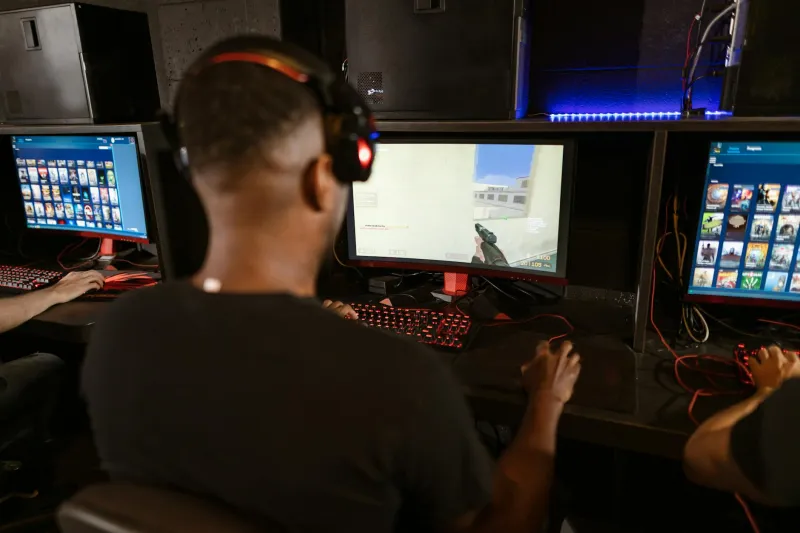
The Tyranny of Milliseconds
In the brutal meritocracy of early online gaming, your ping wasn't just a technical measurement—it was your social security number, credit score, and family lineage all compressed into a single, unforgiving integer. Sub-50 ping players inhabited a different universe from the 200+ ping peasants, and everyone knew exactly where they stood in the hierarchy the moment they joined a server.
This wasn't some abstract technical concept that only network engineers cared about. Your ping time determined whether you could actually participate in the cultural conversations happening in Counter-Strike, Quake III, or Unreal Tournament, or whether you'd spend your gaming sessions as a digital second-class citizen, always a split-second behind the action and constantly making excuses for deaths that "weren't your fault."
The ping display in every multiplayer game became an instant class system more rigid than anything European aristocracy ever managed. 20ms players were digital royalty, 50ms were middle class, 100ms were working poor, and anything over 200ms might as well have been playing a completely different game.
The T1 Master Race
University students with direct T1 access became the internet's first tech bros, casually mentioning their single-digit ping times with the same insufferable smugness that Tesla owners would later bring to conversations about carbon footprints. These weren't just lucky players—they were living in the future, experiencing online gaming the way it was meant to be experienced while the rest of us struggled with the technological limitations of consumer internet infrastructure.
The T1 crowd didn't just have better connections; they had better gaming experiences, better reaction times, and access to a level of competitive play that was literally impossible for dial-up users to achieve. They could make split-second decisions, execute precise movements, and engage in the kind of high-level tactical gameplay that required instantaneous communication between player and server.
Watching a T1 player in action was like seeing someone play with cheat codes enabled, except the cheat was just having access to internet infrastructure that cost more per month than most people's rent. They weren't necessarily more skilled—they just existed in a different temporal reality where their actions registered instantly rather than after a noticeable delay.
Dial-Up Discrimination
The 28.8k and 56k modem users developed their own subculture of creative excuses, technical workarounds, and resigned acceptance of their position at the bottom of the online gaming food chain. "Lag killed me" became the rallying cry of an entire generation of players who were technically participating in the same games as their high-speed peers but experiencing them as completely different activities.
Server browsers became exercises in digital redlining. Players would actively avoid servers where their ping showed up in red numbers, seeking out the few servers where their connection might be competitive. Geographic proximity became crucial—West Coast players avoided East Coast servers, creating regional gaming communities based more on network topology than cultural affinity.
The most dedicated dial-up warriors developed elaborate rituals to optimize their connections: downloading ping-reduction software of questionable effectiveness, scheduling gaming sessions around peak usage hours, and learning to predict network lag the way sailors read weather patterns. They became experts at leading targets, pre-firing around corners, and developing playing styles that could accommodate the fundamental delay between intention and action.
The Cable Modem Revolution
When cable internet started becoming available to residential customers in the late 1990s, it created a new middle class of online gaming citizens. Suddenly, players who had been struggling with 200ms pings found themselves with sub-100ms connections, and the entire social dynamics of gaming servers shifted.
The cable modem users weren't quite T1 aristocracy, but they were no longer dial-up peasants either. They could actually compete, actually participate in real-time conversations, and actually experience games as their designers intended. This created a new form of digital gentrification as neighborhoods with cable access developed more competitive gaming communities while dial-up areas fell further behind.
DSL users occupied their own strange middle ground—better than dial-up but inconsistent enough that their ping times could vary wildly depending on distance from the central office and network congestion. They lived in constant uncertainty about their connection quality, never quite sure whether they'd be competitive or struggling on any given day.
Ping as Performance Anxiety
The obsession with ping times revealed something deeper about early internet culture: the constant anxiety about whether you truly belonged in these digital spaces. Your connection quality became a proxy for your legitimacy as a participant in online communities, and everyone was constantly performing their technical credentials through casual mentions of their network setup.
Players developed elaborate theories about ping optimization that bordered on superstition: certain ISPs were better for gaming, specific times of day offered lower latency, particular network configurations could shave crucial milliseconds off response times. The pursuit of lower ping became an end in itself, separate from any actual improvement in gaming performance.
The ping hierarchy also created its own form of technological determinism—players assumed that better connections automatically meant better players, and high-ping users internalized the belief that their poor performance was inevitable rather than potentially overcome through skill development.
The Bandwidth Class War
What made ping privilege particularly insidious was how it mapped onto existing economic inequalities. T1 access was expensive and primarily available in wealthy areas or through institutional connections. Cable internet rolled out first in affluent suburbs. Rural and low-income urban areas were stuck with dial-up long after high-speed internet became standard in more privileged communities.
This meant that online gaming communities, which felt democratic and meritocratic on the surface, were actually reproducing offline class distinctions through technical infrastructure. The players dominating servers and setting community standards were disproportionately those with access to expensive internet connections, creating cultural norms around gameplay that were literally impossible for lower-income players to meet.
The ping display became a constant reminder of these inequalities, turning every gaming session into a demonstration of who had access to premium internet infrastructure and who was making do with whatever they could afford. It was the first widespread example of how digital divides would shape online community participation in ways that seemed technical but were fundamentally economic and social.
In retrospect, the ping wars of early online gaming were a preview of every subsequent internet inequality: who gets access to high-speed connections, whose voices get heard in online conversations, and how technical limitations become social hierarchies that feel natural but are actually the result of infrastructure choices and economic systems that nobody was really talking about at the time.