From 'pwned' to PowerPoint: How Teenage Fraggers Rewrote the English Language
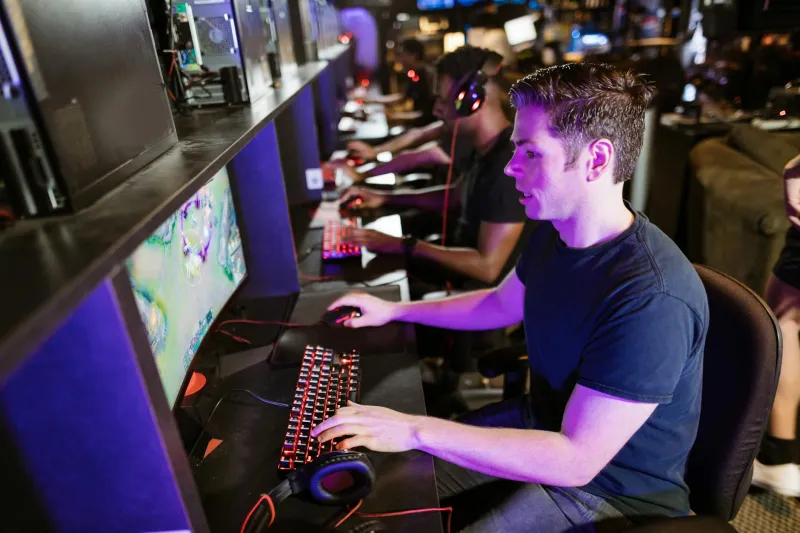
The Linguistic Laboratory of Violence
Before there were TED Talks about "disruption" and "synergy," there were Counter-Strike matches where the future of American English was being forged one headshot at a time. Every frag was a vocabulary lesson, every respawn a chance to contribute to the greatest unintentional linguistics experiment in human history.
The transformation happened in layers. First came the technical terminology—"lag," "ping," "spawn camping"—words that described the mechanical reality of digital combat. But then something beautiful happened: pure creative insult artistry emerged from the primordial soup of adolescent rage and 200ms latency.
The Quake Prophets
It started with Quake clan wars, where "fragging" wasn't just about eliminating opponents—it was about psychological warfare through superior vocabulary. The best players weren't just accurate with rocket launchers; they were poets of humiliation. A well-timed "get rekt" after a perfect rail gun shot carried more emotional weight than Shakespeare's entire catalog.
The IRC channels where clans coordinated became linguistic laboratories. #clan-rivalry channels were where insults were workshopped, refined, and beta-tested before deployment in actual matches. Kids would spend hours crafting the perfect comeback for specific gaming scenarios, creating an entire meta-game around verbal superiority.
Unreal Tournament: The Cambridge of Trash Talk
Unreal Tournament '99 elevated gaming insults to high art. The game's built-in voice taunts ("EXCELLENT!", "MONSTER KILL!") provided a foundation, but the real innovation happened in the text chat between matches. Players developed elaborate hierarchies of skill-based insults that correlated directly with frag counts.
The beauty of UT trash talk was its precision. "Camper" wasn't just an insult—it was a specific tactical critique. "Rocket spam" indicated lazy gameplay. "Shock combo whore" suggested over-reliance on a particular weapon combination. These weren't random insults; they were performance reviews delivered through pure adolescent venom.
Counter-Strike: The MBA Program
Then came Counter-Strike 1.6, and everything changed. The round-based structure created natural pauses for extended verbal combat. The buy system introduced economic terminology ("eco round," "force buy") that would later migrate wholesale into startup culture. The tactical complexity demanded a more sophisticated vocabulary of failure.
CS matches were where "clutch" evolved from mechanical terminology into a general descriptor of high-pressure performance. "Choke" became the universal term for failure under pressure. "Tilted" described the psychological state of competitive breakdown. These weren't gaming terms—they were psychological concepts being discovered through digital combat.
The Great Migration
Somewhere around 2004, these gaming terms started appearing in non-gaming contexts. College kids who spent their nights getting headshot on de_dust2 began using "owned" to describe everything from failed pickup attempts to botched presentations. "Noob" became the universal descriptor for inexperience in any domain.
The corporate world, always desperate to seem relevant, began absorbing gaming vocabulary wholesale. "Level up" became professional development. "Boss fight" described difficult meetings. "Achievement unlocked" became the standard response to any minor accomplishment. The language of digital violence became the language of American ambition.
IRC: The Graduate School
But the real linguistic evolution happened in the IRC channels where gaming communities congregated between matches. These were the research universities of internet slang, where terminology was debated, refined, and standardized across gaming communities.
#gaming channels became linguistic melting pots where Quake veterans shared vocabulary with emerging Counter-Strike players, where Unreal Tournament clanners traded insults with StarCraft strategists. The cross-pollination created a unified gaming dialect that transcended individual game communities.
The Unacknowledged Revolution
Today's corporate America speaks fluent gaming without realizing it. Every time someone talks about "grinding" through a project, they're using MMO terminology. "Rage quit" describes half of all workplace departures. "Camping" refers to anyone who won't leave their desk. "Spawn kill" is what happens to new employees who get overwhelmed on their first day.
The most successful tech companies are run by people who internalized gaming vocabulary during their formative years. They don't think of it as "gaming language"—to them, it's just how you describe competitive scenarios. The startup world's obsession with "winning" and "domination" isn't business strategy; it's the natural evolution of frag-based thinking.
The Eternal Respawn
What makes this linguistic revolution so remarkable is that it happened organically, without any institutional support or academic recognition. No university linguistics department was studying the emergence of "pwned" as a legitimate English word. No corporate consultants were analyzing the semantic evolution of "epic fail."
It was pure grassroots language development, driven by the need to communicate complex competitive emotions in real-time during digital combat. The kids getting fragged on Facing Worlds weren't trying to revolutionize English—they were just trying to express the indescribable feeling of getting rocket-launched off a platform while your entire clan watched.
And somehow, that was enough to change how America talks forever.