When dyndns.org Was the Backbone of Basement Server Civilization
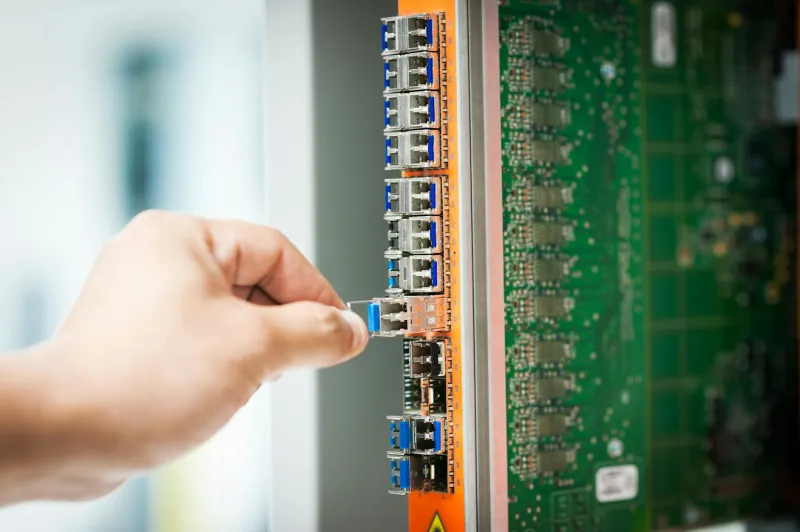
The Duct Tape That Held Cyberspace Together
Picture this: It's 2001, you're 16, and you've just convinced your parents to upgrade to DSL. Your bedroom has been transformed into mission control for your personal empire—a Frankenstein computer running Red Hat Linux, three cooling fans that sound like a jet engine, and dreams of running your own FTP server. There's just one problem: your ISP keeps changing your IP address like it's playing musical chairs.
Enter DynDNS, the unsung hero that turned every suburban basement into a potential data center.
The Great Dynamic DNS Gold Rush
Before the cloud made everything boring and expensive, DynDNS offered something revolutionary: a free subdomain that would follow your IP address wherever Comcast decided to move it. Suddenly, every script kiddie with a spare computer could run services that the world could actually find.
The land grab was immediate and brutal. Everyone wanted the coolest subdomain possible. l33th4x0r.dyndns.org was taken within minutes. elite-warez.homeip.net became more valuable than real estate. Kids would camp IRC channels just to snipe expired domains when someone's parents finally discovered the electricity bill.
You weren't just picking a hostname—you were crafting your digital identity. Your DynDNS address was your calling card, your business card, and your street cred all rolled into one impossibly long URL that you'd have to spell out letter by letter over IRC.
The Suburban Server Farm Revolution
Every major underground operation ran on this infrastructure. That legendary FTP site with 50TB of movies? Probably hosted on a Dell Dimension in someone's garage, accessible via totally-not-piracy.hopto.org. The IRC bot that served as the central nervous system for three different warez channels? Running 24/7 on a repurposed Windows 98 machine, reachable through my-1337-bot.no-ip.com.
The beauty was in the chaos. There was no central authority, no terms of service that mattered, no corporate oversight. Just thousands of teenagers with broadband connections and delusions of grandeur, all held together by the digital equivalent of safety pins and electrical tape.
When Your Domain Went Dark
The most terrifying moment in any young sysadmin's life wasn't a hard drive crash or a power outage—it was when your DynDNS address stopped resolving. Maybe you forgot to renew your free account. Maybe your client software crashed and stopped updating your IP. Maybe DynDNS just decided your subdomain violated their nebulous acceptable use policy.
Whatever the reason, when my-awesome-server.dyndns.org returned NXDOMAIN, it wasn't just a technical failure—it was digital death. Your carefully built reputation, your user base, your place in the underground economy—all gone, replaced by the DNS equivalent of a busy signal.
The smart operators had backup domains. The paranoid ones ran their own DNS servers. But most of us just crossed our fingers and hoped that our parents wouldn't unplug the router during spring cleaning.
The Arms Race of Creative Hostnames
As the internet grew more crowded, finding available subdomains became an art form. You'd spend hours crafting the perfect combination of 1337speak and cultural references, only to discover that matrix-h4x0r-neo.homelinux.org was already taken by some kid in Finland.
The really dedicated operators would register multiple domains across different services—DynDNS, No-IP, TZO—creating a redundant network of hostnames that could survive the failure of any single provider. It was like running a distributed system, except instead of AWS regions, you had free DNS services run by college students who might shut down at any moment.
The End of an Era
Eventually, the party ended. DynDNS started charging for everything. ISPs began blocking common server ports. Parents got wise to the massive electricity bills. The underground moved to offshore hosting and Tor hidden services, trading the wild west freedom of dynamic DNS for the professional reliability of actual data centers.
But for a brief, shining moment, every suburban bedroom was a potential server farm, every cable modem was a gateway to digital freedom, and every DynDNS subdomain was a small act of rebellion against the corporate internet that was slowly taking over.
The infrastructure may be gone, but the spirit lives on. Every time someone spins up a DigitalOcean droplet or deploys to Heroku, they're channeling the same energy that once drove thousands of teenagers to turn their family computers into public servers, held together by nothing but determination and a free subdomain that would probably break if you looked at it wrong.
RIP dyndns.org. You were the duct tape that held our digital dreams together.