PC방 Prophets: How Korean StarCraft Fans Engineered Twitch's Brain Six Years Before Broadband Got Good
Let's establish something uncomfortable upfront: while the Western gaming world was congratulating itself for figuring out that you could watch other people play video games on the internet, South Korea had already built a professional broadcasting infrastructure around exactly that concept, complete with dedicated cable channels, celebrity commentators, team sponsorships from Samsung and SK Telecom, and viewer metrics sophisticated enough to make modern streaming platforms feel embarrassed.
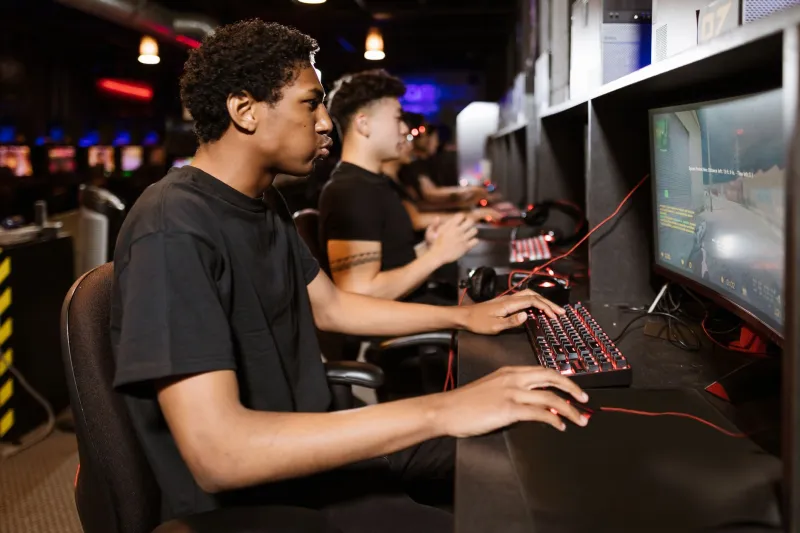
This happened in the late 1990s. The dominant game was StarCraft: Brood War. The venues were called PC방 — PC cafés, basically — and they were everywhere. And the engagement systems those early Korean esports broadcasters developed by sheer necessity would be reverse-engineered by Silicon Valley fifteen years later and called innovation.
What Was Actually Happening in Seoul
StarCraft arrived in South Korea in 1998 and immediately became something that defies easy Western analogy. It wasn't just popular. It was culturally load-bearing. The IMF financial crisis had devastated the Korean economy, the government was investing heavily in broadband infrastructure as an economic recovery strategy, and PC cafés were both cheap entertainment and, for some unemployed young men, essentially a place to live.
Into this environment dropped a real-time strategy game with a skill ceiling so high that professional players would spend eight to twelve hours a day practicing and still find themselves outclassed. The gap between a good amateur and a professional was visible, dramatic, and fascinating to watch. This is the first thing the Korean gaming scene understood that the West hadn't yet: spectator value is a function of visible skill differential.
You could watch a StarCraft pro and see things you couldn't do. The actions-per-minute counts were obscene — two hundred, three hundred APM from the best players, their hands moving across keyboard and mouse in patterns that looked like a different species operating a computer. Watching was genuinely instructive. And instructive content, it turns out, is the kind people watch for a long time.
The Metrics Nobody Called Metrics
By 1999, Korean cable channels OGN and MBC Game were broadcasting StarCraft tournaments to actual television audiences. This required solving problems that Twitch's engineering teams would later build entire product roadmaps around.
How do you make a real-time strategy game watchable to someone who doesn't play at a high level? You develop observer interfaces — special camera modes that follow the action intelligently, cutting between bases and battles the way a sports director cuts between field positions. How do you maintain viewer engagement during the slow early-game build phases? You develop commentary culture: two-person booths with a play-by-play caller and a color analyst, exactly like basketball, discussing strategy and predicting outcomes.
How do you measure whether it's working? You track viewer retention by segment. You notice which matchups draw bigger audiences (Terran vs. Zerg over everything, if you're curious). You correlate player popularity with viewership spikes and start building star systems around individual players — Lim Yo-Hwan, known as SlayerS_BoxeR, was famous enough that his matches reliably spiked ratings. He had fan clubs. He did endorsements. He was, functionally, an athlete with a streaming career, except streaming didn't exist yet.
These weren't called engagement metrics. They were just called: things the producers noticed. But the underlying logic was identical to what Twitch would systematize a decade later.
Meanwhile, in an American Basement
In 1999, the average American teenage gamer was playing Counter-Strike on a 56k connection, arguing about whether the AWP was a legitimate weapon or a crutch for people who couldn't aim, and watching grainy demo files of their friends' best rounds on a website that loaded in approximately seven minutes.
There was no infrastructure for watching other people play games. There was no cultural framework for it, either. The dominant American gaming media was GameFAQs walkthroughs and GameSpy LAN party coverage. The idea that you might watch a stranger play a video game for entertainment — not to learn a trick, but because the playing itself was compelling — was not yet legible.
This isn't a knock on American gaming culture. It's a structural observation: Korea had broadband, physical gathering spaces optimized for gaming, and a game with a high enough skill ceiling to justify spectatorship. The US had none of these things in sufficient quantity. The PC café model never took hold here the way it did in Asia. American gamers played at home, alone, or with friends at LAN parties that required hauling a full tower PC to somebody's garage.
You can't build a spectator culture around a LAN party in a garage.
The Replay as Proto-VOD
One feature of StarCraft that deserves its own moment of recognition: the replay file.
StarCraft saved complete game replays as small files — a few hundred kilobytes — that could be shared, downloaded, and watched at any time. The replay showed the entire game from any perspective, with fog-of-war lifted or applied as the viewer chose. You could watch a pro's build order from their opponent's point of view. You could analyze decision points frame by frame.
Korean gaming communities built entire replay analysis cultures around these files. Sites hosted archives of pro replays. Forums had threads breaking down specific tactical decisions. Players would watch the same three-minute sequence of a BoxeR TvZ opening fifty times, the way film students watched Kubrick.
This is video-on-demand. It is precisely video-on-demand. It lacked only the video.
When Twitch introduced VODs and clips, and when YouTube Gaming built its entire identity around highlight packages and analysis content, they were solving a problem that Korean StarCraft communities had already solved with 200KB files and forum posts. The technology scaled up. The behavior was identical.
The Lesson Silicon Valley Paid $970 Million to Learn
Amazon bought Twitch in 2014 for $970 million. The pitch was simple: people watch other people play games, and this is a massive, monetizable behavior.
This was true. It was also approximately fifteen years old by the time anyone in the Valley paid serious attention to it.
The Korean esports ecosystem had demonstrated, with actual data from actual broadcasts watched by actual millions of people, that competitive gaming was a spectator sport, that individual players could be celebrities, that live commentary added value, that replay analysis retained audiences, and that the engagement patterns looked remarkably like traditional sports broadcasting.
All of this was documented. All of it was visible. None of it was in English, and the American gaming press was busy writing about whether the PlayStation 2 was better than the Xbox, so it went largely unnoticed.
The PC방 prophets didn't get acquisition offers. They got copied, eventually, by platforms with better servers and English-language interfaces. BoxeR retired. OGN kept broadcasting. And somewhere in a Twitch product meeting, someone probably presented a deck about "engagement mechanics" without knowing they were describing a solution a Korean cable channel had already shipped in 1999.