Bedroom Broadcasters: How SHOUTcast Turned Suburban Kids Into Radio Pirates Before the RIAA Knew What Hit Them

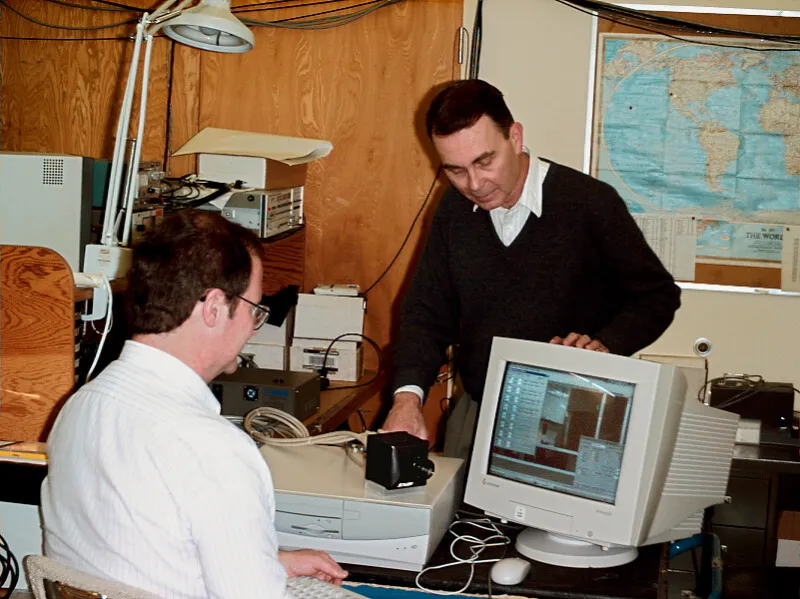
Photo: West Midlands Police from West Midlands, United Kingdom, CC BY-SA 2.0, via Wikimedia Commons
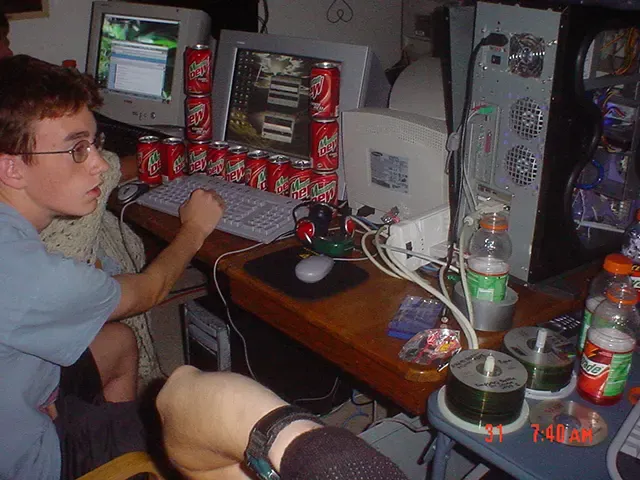
Sometime in the spring of 1999, a teenager in a suburb of Columbus, Ohio — let's say his handle was DJ_Vortex and he was wearing a Deftones shirt — pointed a piece of software called SHOUTcast at his Winamp playlist, opened port 8000 on his router, posted the stream URL in three IRC channels, and became, without any particular fanfare, a radio station. He had no FCC license. He had no RIAA agreement. He had no advertisers, no program director, no morning zoo crew, and no legal right to broadcast approximately 80% of the music in his queue. He had a decent DSL line, a really good playlist, and a listener count that peaked at eleven people on a Tuesday night.
 Photo: Columbus, Ohio, via wanderingwheatleys.com
This was the golden age of internet radio, and it was magnificent.
Nullsoft Drops a Bomb, Nobody Notices
SHOUTcast was born from Nullsoft, the small company that had already changed everything by releasing Winamp in 1997. Winamp was the MP3 player — the one with the llama-whipping intro screen, the one that could skin itself into anything, the one that made your computer feel like a real stereo for the first time. Nullsoft's founders, Justin Frankel and Tom Pepper, were not particularly interested in following rules. They were interested in building things that worked and watching what happened.
 Photo: Justin Frankel, via justinfrankel.org
What happened with SHOUTcast was that they created a client-server architecture that was elegant in its simplicity: a server component that accepted an audio stream and rebroadcast it to multiple listeners, and a source plugin for Winamp that encoded your audio in real time and fed it to the server. The whole thing was free. The documentation was minimal. The possibilities were immediately obvious to anyone who'd spent time in IRC's MP3 channels.
You could have your own radio station. Right now. Tonight. Go.
The Shoutcast.com Directory: A Radio Dial for the Lawless
Nullsoft launched shoutcast.com as a directory for active streams, and it became one of the most interesting pages on the early internet: a constantly updating list of thousands of stations broadcasting around the clock from bedrooms, dorm rooms, office closets, and server rooms across the country and eventually the world.
The genre diversity was extraordinary and slightly insane. You could find a station playing nothing but 1970s prog rock, operated by a guy in Portland who'd been awake for thirty-six hours. You could find a drum and bass station run by a sixteen-year-old in New Jersey who'd learned about the genre three weeks ago and was already evangelical about it. You could find stations playing video game soundtracks, stations playing nothing but Tool, stations playing exclusively anime themes, stations where the DJ occasionally came on mic to read poetry or complain about their parents.
And then there were the scene crossover stations — streams operated by people who were also active in IRC's warez and MP3 channels, who had access to music that hadn't been commercially released yet, or at least hadn't been commercially released in the United States. These stations were operating at the absolute bleeding edge of music distribution, playing tracks weeks before they hit retail shelves, and their listener counts told the story: these were the channels that got passed around in #mp3 and #warez with the reverence usually reserved for a freshly cracked AAA game.
The DJ Experience (No Turntables Required)
The actual experience of running a SHOUTcast station in 1999 was a specific kind of beautiful chaos that modern streaming platforms have completely failed to replicate.
You'd build your Winamp playlist with obsessive care, the way people now build Spotify playlists except with actual stakes because this was going out live to real people. You'd set your bitrate — 128kbps if you had the bandwidth, 64kbps if you were sharing the line with a family member who might pick up the phone and destroy your stream mid-song. You'd configure the server, open the port, pray that your ISP's terms of service wouldn't notice what you were doing, and go live.
Then you'd sit there watching the listener count. One. Three. Seven. Someone posted your stream in a channel. Eleven. Someone else reposted it. Seventeen. You were basically famous.
The best operators developed genuine on-air personalities, dropping in between tracks to talk about the music, take requests via IRC, and occasionally rant about whatever was happening in the scene. The line between DJ and community manager didn't exist because the community was right there in the chat, talking back in real time. This was interactive radio before anyone had invented the phrase "interactive radio."
The technical problems were constant and character-building. Your stream would drop when your mom picked up the phone downstairs. Your server would crash when too many people connected simultaneously, which was both a failure and a kind of victory. Your ISP would occasionally notice that you were running a server on a residential line and send a warning letter that you would ignore until they sent a second one. These were acceptable costs of doing business.
The RIAA Wakes Up (Eventually)
The Recording Industry Association of America's response to SHOUTcast demonstrated the organization's signature approach to technological change: first, ignore it; then, panic; then, litigate; then, watch helplessly as the behavior you tried to stop becomes the new normal under a different name.
The RIAA's initial problem was definitional. Were SHOUTcast streams radio? Were they on-demand streaming? Were they something else entirely? The legal framework for digital audio broadcasting was being invented in real time, and the industry's lawyers were working with statutes written for a world where a radio station required a transmitter tower and a federal license, not a Linux box in someone's basement.
The DMCA's webcasting provisions, which eventually emerged from this confusion, attempted to impose licensing requirements on internet radio that were substantially more burdensome than those applied to traditional broadcast radio. The rate structures they proposed would have made operating a small internet station economically impossible — which was, to put it charitably, probably the point.
For the bedroom broadcasters, this didn't matter much in the short term. Enforcement against individual operators running stations with eleven listeners was not a priority. The stations kept running. The playlists kept playing. The listener counts kept ticking.
What the Basements Built
Here is the historical argument that needs to be made clearly and without apology: SHOUTcast bedroom broadcasters invented music discovery as a social practice on the internet. Not Pandora. Not Last.fm. Not Spotify. A teenager in Ohio with a DSL line and a really good taste in music, broadcasting to eleven strangers who found him through a directory listing, was doing algorithmic music discovery before the algorithm existed — and doing it better, because there was an actual human being making choices based on actual passion rather than a collaborative filtering model trained on streaming data.
The recommendation wasn't "because you listened to X, you might like Y." The recommendation was "trust me, this track is incredible, I found it in #mp3 last week and I've been playing it three times a day since then." That's a different thing. That's better.
Nullsoft itself ended up being acquired by AOL in 1999, in another chapter of the late-90s internet money absurdity that also claimed GeoCities. Frankel would go on to create Gnutella, essentially by accident, which is a whole other story about unintended consequences and corporate panic. SHOUTcast would eventually be sold and re-sold, its ownership passing through enough hands that tracking it became an exercise in corporate archaeology.
But the streams kept running. Some of the stations that launched in 1999 stayed online for years, their playlists growing, their listener communities persisting through platform changes and legal threats and the general chaos of the internet's adolescence.
DJ_Vortex eventually got a real job. But for a few years in the late 1990s, he was a radio station, broadcasting from his bedroom to eleven strangers who stayed up late to hear what he'd play next.
Spotify has 600 million users and a market cap in the tens of billions. It has never once felt like that.
SHOUTcast still exists, technically. The directory is a shadow of what it was. The golden age, as with all golden ages, is gone. But port 8000 remains open in the hearts of everyone who ever watched a listener count climb past ten and felt, briefly, like a god.